



On last year’s International Lesbian Day, we talked about the international history of the word Lesbian, our community’s role in the AIDS crisis, and signifiers of lesbians.
This year, we collaborated with Lady’s Club and Saskia Wieringa & co-activists to take a brief look at how lesbian herstory looks within Asia regions.
Taiwanese Lesbians Were… Fictional Crocodiles?
Lady’s Club is a social media account run by a Taiwanese lesbian couple, Strawberry and Rach. They research lesbian history and culture, presenting lesbian voices through physical prints. Today, they shared to us on how physical prints have become beloved medium and important footprints in Taiwanese lesbian community history.
In the past Taiwanese conservative society, lesbians lived under considerable repression, fearing the exposure of their identities. In such environments where physical connection was highly risky, literature became an important staple in lesbian community history – and has remained so until now. Not only reading has become a comfortable and important hobby of Taiwanese lesbian communities, early online friend-seeking even often relied on literary style rather than posting photos of physical appearances – leading to the running joke that lesbians had to “write poetry online just to hook up.”
During the tumultuous time that was the 1990s, Qiu Miaojin wrote a book titled Notes of A Crocodile. The books tells us the story of a crocodile named Lazi (拉子) who wore human skin in order to disguise itself in a society of humans. The story was meant to be an allegory of a lesbian living in a homophobic society. The allegory was very effective, proven by how popular this book was amongst Taiwanese lesbian communities.
The protagonist’s name Lazi (拉子), due to the popularity of the book and its resemblance to the word les in English, was soon claimed to be a definitive term among Taiwanese lesbian communities.
A Union of Indonesian Fruit and Flower
In modern queer communities, we tend to use the international signifiers butch and femme. But with the knowledge that queerness has always been an inherent part of local cultures across Asia regions pre-colonialism, it isn’t surprising that each region once had their own local terms for similar concepts.
An excerpt from A Political Biography of the Indonesian Lesbian, Bisexual and Trans Movement, a book researched and written by Saskia Wieringa, revealed that Indonesian butches and femmes once referred to themselves as sentul and kantil.
Sentul is more internationally known as santol fruit or cotton fruit. It is a fruit with a shell so hard, one would need a knife to carve it open. However, within it lies such soft, juicy insides. Indonesian butches once referred to themselves with the name of this Indonesian fruit as it perfectly represents the butch’s duality of strength and tenderness.
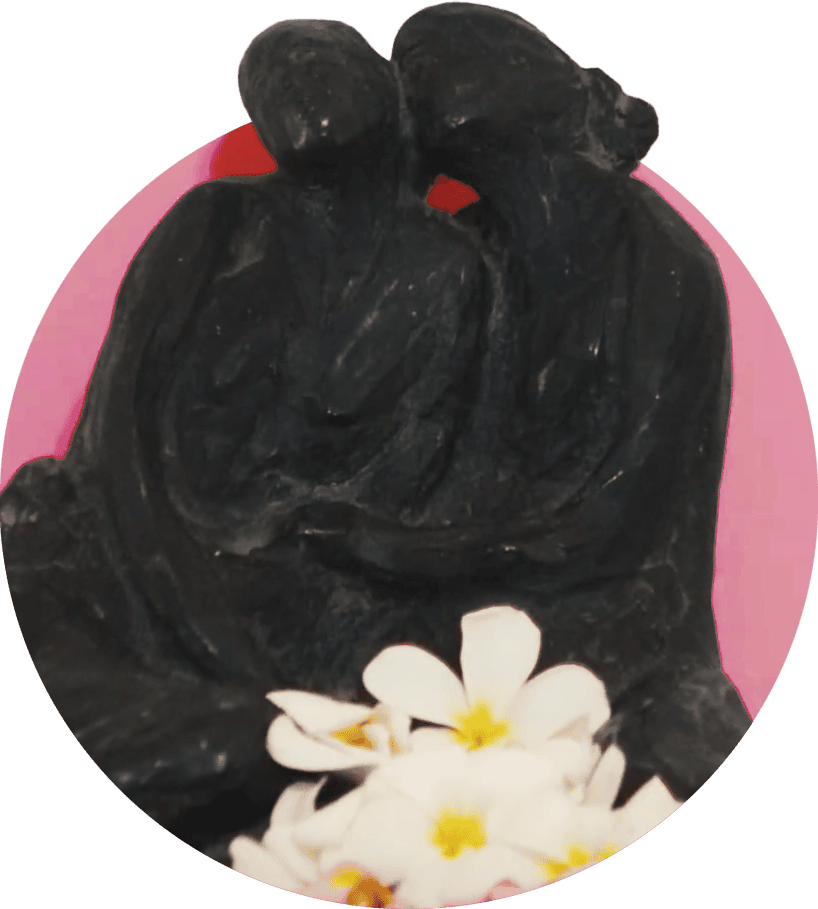
Kantil, its pair, is internationally known as white champaca flower. While Indonesia is an archipelago nation with a wide variety of cultures, white champaca flower has had significant cultural meaning across these cultures. Its wide reverence and symbolization of purity and harmony is unsurprising as kantil has feminine beauty that is complemented by its white color. These aspects, combined with its appearance that is similar to female organ, had earned its place as the definitive term among Indonesian femmes.
Lesbian herstory beyond Western lens
The glimpse of lesbian herstory our partners shared has revealed to us how rich the LBQ herstory across Asia regions is. Let’s take a full closer look at our community and movement history in Asia Feminist LBQ Conference 2027 with:

Strawberry & Rach from Lady’s Club
In their session, they will share to us the lesbian herstory of Taiwanese publishing and its importance in the community. You can even browse their Lesbian Bookshelf, reenactment of Lady’s Club’s past Taiwanese Pride event where visitors could look through past lesbian Taiwanese publishings.
Want a sneak peek on what you can expect? Strawberry & Rach have some book recommendations for you to look forward to!
- The Freestyle of Love (愛的自由式) by Chang Chuan-fen (張娟芬)
If you love Tiktok-style street interviews, this book is a perfect fit for you. The Freestyle of Love is a collection of interviews and research on Taiwanese lesbian identity and emotional journeys among Taiwanese lesbians in the early 2000s. It introduces the origins of the Taiwanese term T (butch), P (femme), and “不分(non-categorized, switch)” identities, as well as various typical and atypical lesbian temperaments and expressions of behavior. The older edition even has illustrations that visualize possible appearances of the interviewees from a lesbian perspective! - Nestling in-between the Center and the Margins: A Study of Contemporary Novels of Lesbian Elites in Taiwan. (依違於中心與邊陲之間:臺灣當代菁英女同志小說研究) by Pei-Ling Lin (林佩苓)
The book analyzes lesbian texts across three decades, from 1980s to 2000s, tracing how lesbians from different eras experienced love. Early narratives often remained within the confines of all-girls’ schools, depicting innocent affection or repressed desire. Our article has briefly touched on the importance of literature within Taiwanese lesbian culture, which shows how important this book’s analysis is on tracing Taiwanese lesbian history. The book also raises questions about how the pervasiveness of sad endings, implying the inability to imagine a happy future for lesbians, in these stories affect such communities that rely on these stories for their connections and self-finding.
Saskia Wieringa & co-activists ft. Screening of The Emerald of Archipelago
In this session, Saskia Wieringa as the writer of the first extensive research on Indonesia LBT community and movement history, A Political Biography of the Indonesian Lesbian, Bisexual and Trans Movement, and co-activists will share more about the topic. There is also an exclusive screening of the documentary based on the book, The Emerald of Archipelago.
Watch the trailer of the first documentary on Indonesian LBT community and movement history here.
The documentary is currently in production. Please support the crowdfunding here by donating or sharing the link.