


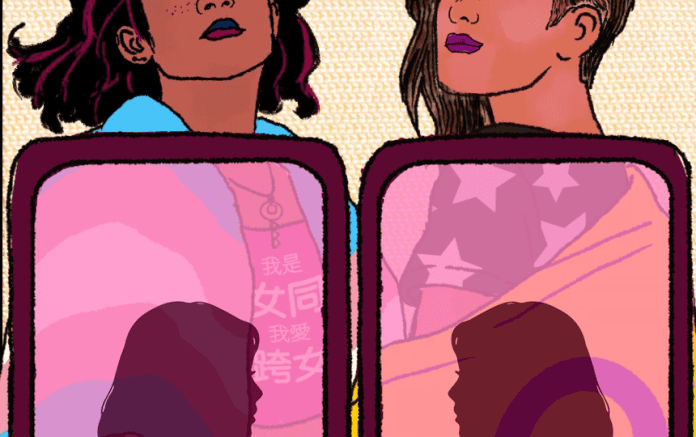
On 8 November, we celebrated Intersex Solidarity Day and Trans Awareness Month at the same time. We collaborated with Hiker Chiu & Tseng Hsiu-Ping and talked about the question that has been haunting intersex individuals and trans lesbians within our communities:
“Are you female enough?”
Policing The Mythical Predators
Many trans women are often treated as potential suspects instead of a part of the community they should belong with simply because their appearances don’t “pass” or they have not able yet or have chosen to not to undergo gender-affirming surgery to look “feminine enough”. Communities reject them claiming safety issues, yet factual data say otherwise. Researchers from many studies such as The Transgender Bathroom Debate at the Intersection of Politics, Law, Ethics, and Science (Barnett, et al.) have repeatedly stated to unable to find any concrete evidences of the rise of sexual predators taking advantage of transgender equality laws and acceptance. Scanning the headlines of any country’s news easily proves that the opposite of that accusation is true: that trans women are in higher danger of becoming victims of violent crimes.
Similar myth unfortunately also haunts the lesbian communities in Taiwan. Tseng Hsiu-Ping shared that while the crime rate among transgender individuals in Taiwan is zero, people often project the high crime rate of cisgender men onto trans women – creating this baseless prejudice.
And when we police appearances and chromosomes, trans individuals are simply the first, but not the only, victims excluded.
The Domino Effect of Exclusion
Intersex individuals in Asia have already faced severe exclusion and discrimination from their governments. Intersex Asia’s Intersex Justice in Asia Regional Comparative Report (2026) showed that out of 13 countries, none of them has laws protecting intersex individuals from nonconsensual medical procedures and 8 countries even have social or religious mandates for them to go under surgery. Sharing the same societal and legal oppression, they expected inclusion from LBQ communities… only to be disappointed by similar prejudices.
“Many intersex individuals with 46XX chromosomes raised as girls develop more masculine facial features,” shared Hiker Chiu, Executive Director of Intersex Asia and Founder of OII Chinese. “This leads to them being excluded from many LBQ communities because their voices and appearances don’t fit narrow gender norms”. Ironic, considering LBQ communities are supposed to defy societal norms!
And it won’t stop there too.
What about women who can’t give birth? Or those who have deeper voice, or shorter hair, or fatter, or taller, or hairier….
And when we realize it, all we are left with are those who demand us to marry a man and give birth to his children.
Better Inclusion for Stronger Organising
Today, our partners Hiker Chiu and Tseng Hsiu-Ping have shared the glimpse of prejudices intersex individuals and trans lesbians face within LBQ communities and movements. We invite all to examine our communities’ prejudices and strengthen our movement in Asia Feminist LBQ Conference 2027 with:
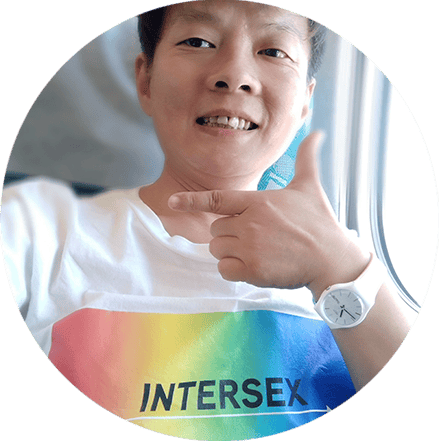
Hiker Chiu from Intersex Asia & OII Chinese
Tseng Hsiu-Ping
In their session, they will share to us the lived experiences of Taiwanese intersex individuals and trans lesbians along with the prejudices they face within LBQ communities and movements.
Want to be a better ally for intersex individuals? Intersex Asia has some resources you can check!
- The ABCs of Intersex
This is a great start for those of you who just started to research what intersex is. Avoid misinformation and read about it from intersex individuals themselves! - The Intersex Glossary
Words have power, and by using the right words, we are allying ourselves with intersex individuals’ fight for their agency. - How to Avoid Being Performative
Worried about being performative in your allyship? Read this article to learn what intersex individuals need from our allyship.