

LEGACY TIMELINE

The Origins: 1986

The Asia Lesbian Network (ALN) Founded

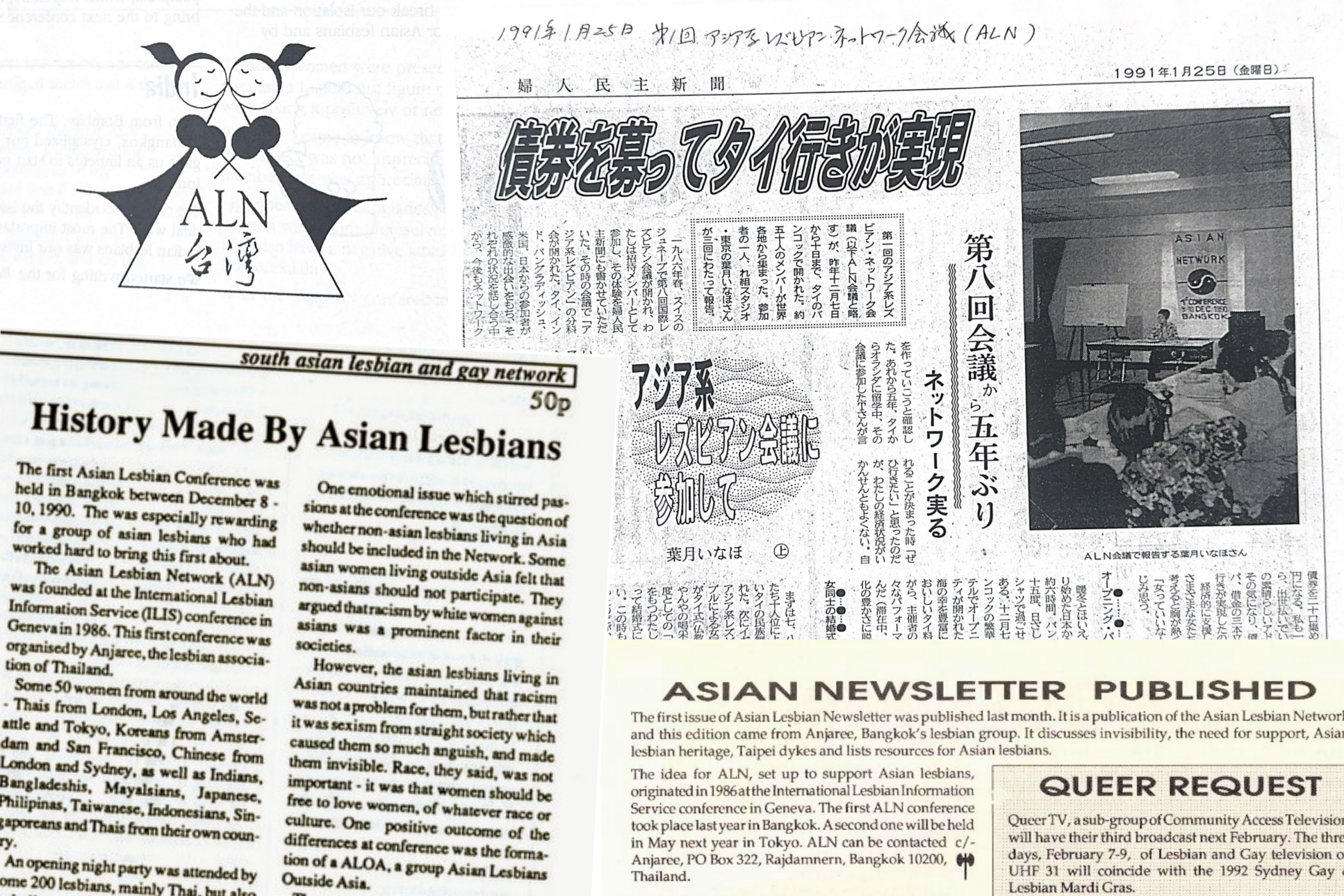
In March 1986, lesbians from Bangladesh, India, the United States, Japan, and Thailand gathered at the International Lesbian Information Service (ILIS) conference in Geneva, Switzerland. They organised workshops and established the Asian Lesbian Network (ALN), creating the first transnational platform connecting LBQ voices across Asia. Over 800 women from five continents attended the Geneva conference. Founder Anjana Tang Suvarnananda traveled throughout Asia, conducting outreach with lesbian communities in Singapore, the Philippines, India, Sri Lanka, and Bangladesh. This laid the groundwork for a movement spanning the region.

Historic Asian Lesbian Conferences

Before we gather in 2027, we honour the gatherings that made this possible. Between 1986 and 1998, Asian LBQ activists built transnational networks across hostile political landscapes, creating spaces where visibility itself became resistance. Each conference laid the groundwork for the regional solidarity that continues to shape our movement today.
Historic Conference 1990-1998

Bangkok, Thailand
1990
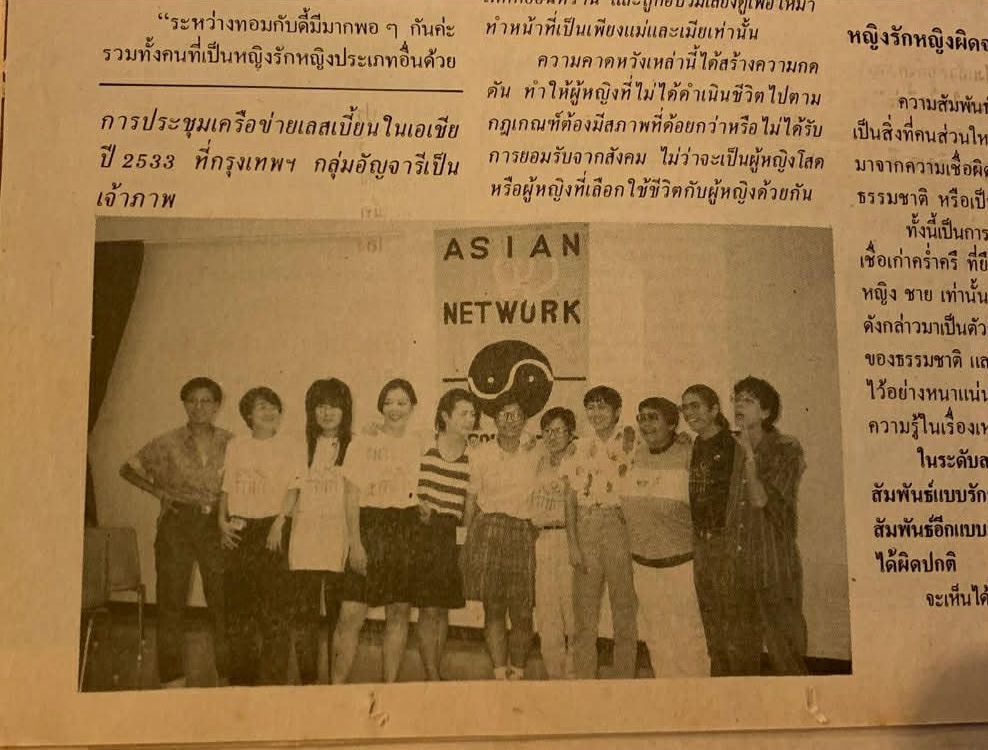
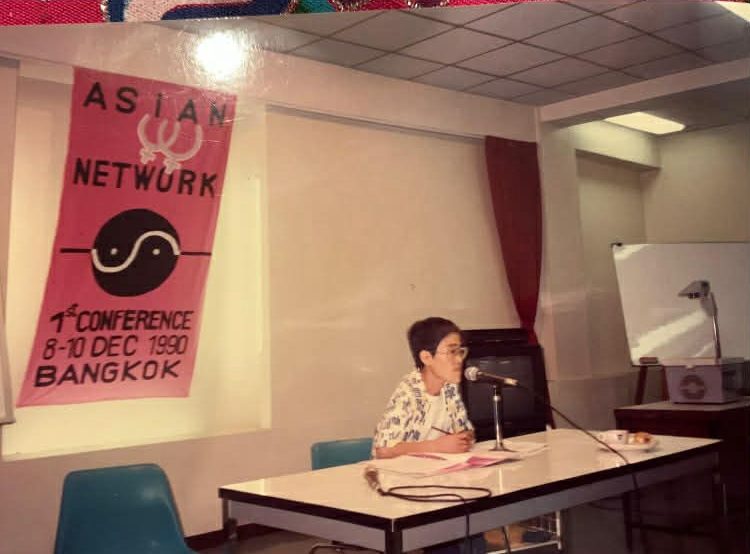
The first Asia Lesbian Network conference took place in December 1990 in Bangkok, Thailand, hosted by Anjaree. Over two hundred participants attended, including lesbians from various Asian countries and expatriates.
Tokyo, Japan
1992
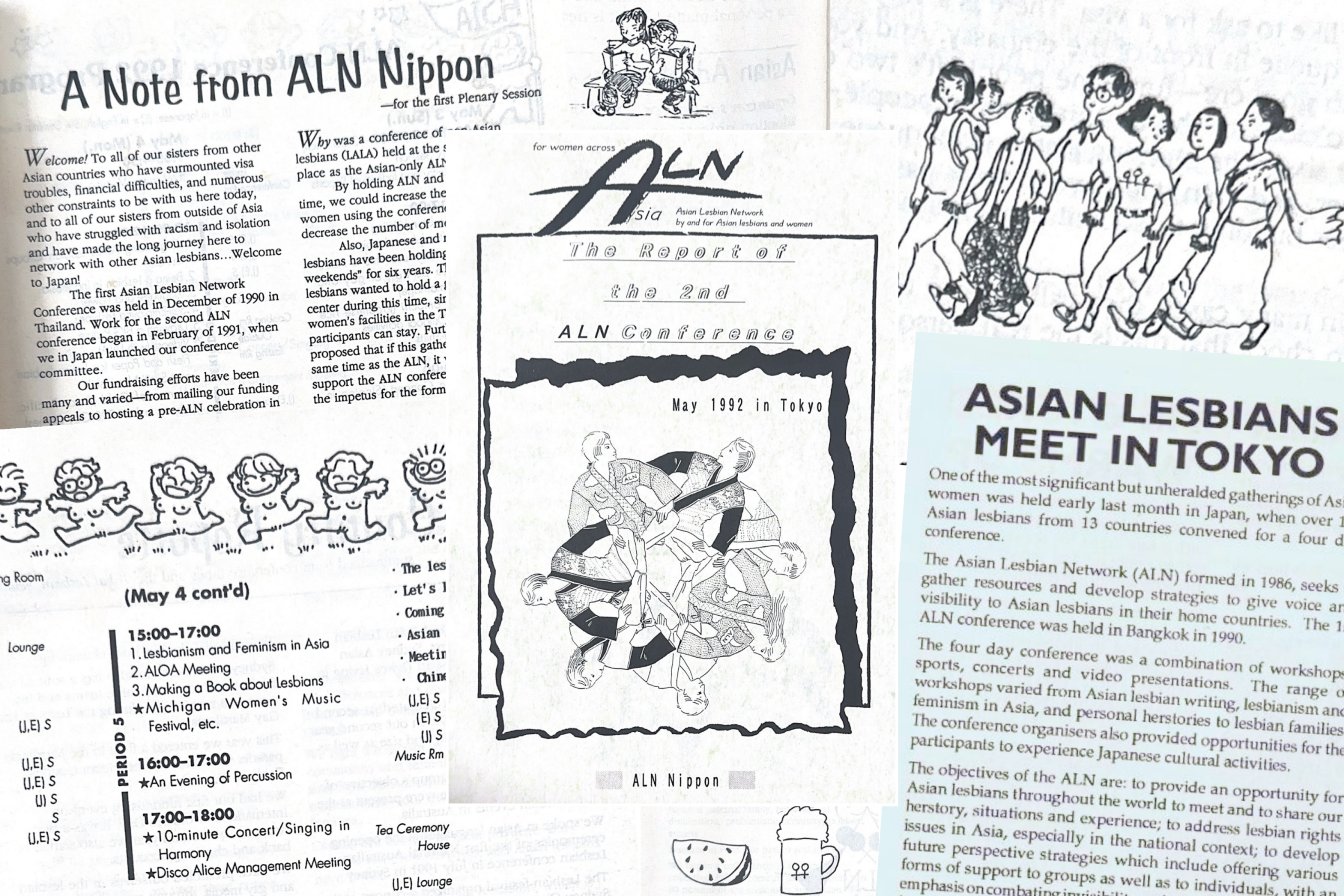
The second conference was held in Tokyo, Japan, in May 1992, organised by ALN-Nippon (Regumi). This became the gathering that marked ALN's expansion beyond Southeast Asia, with 170 participants from thirteen countries.
Wulai, Taipei, Taiwan
1995
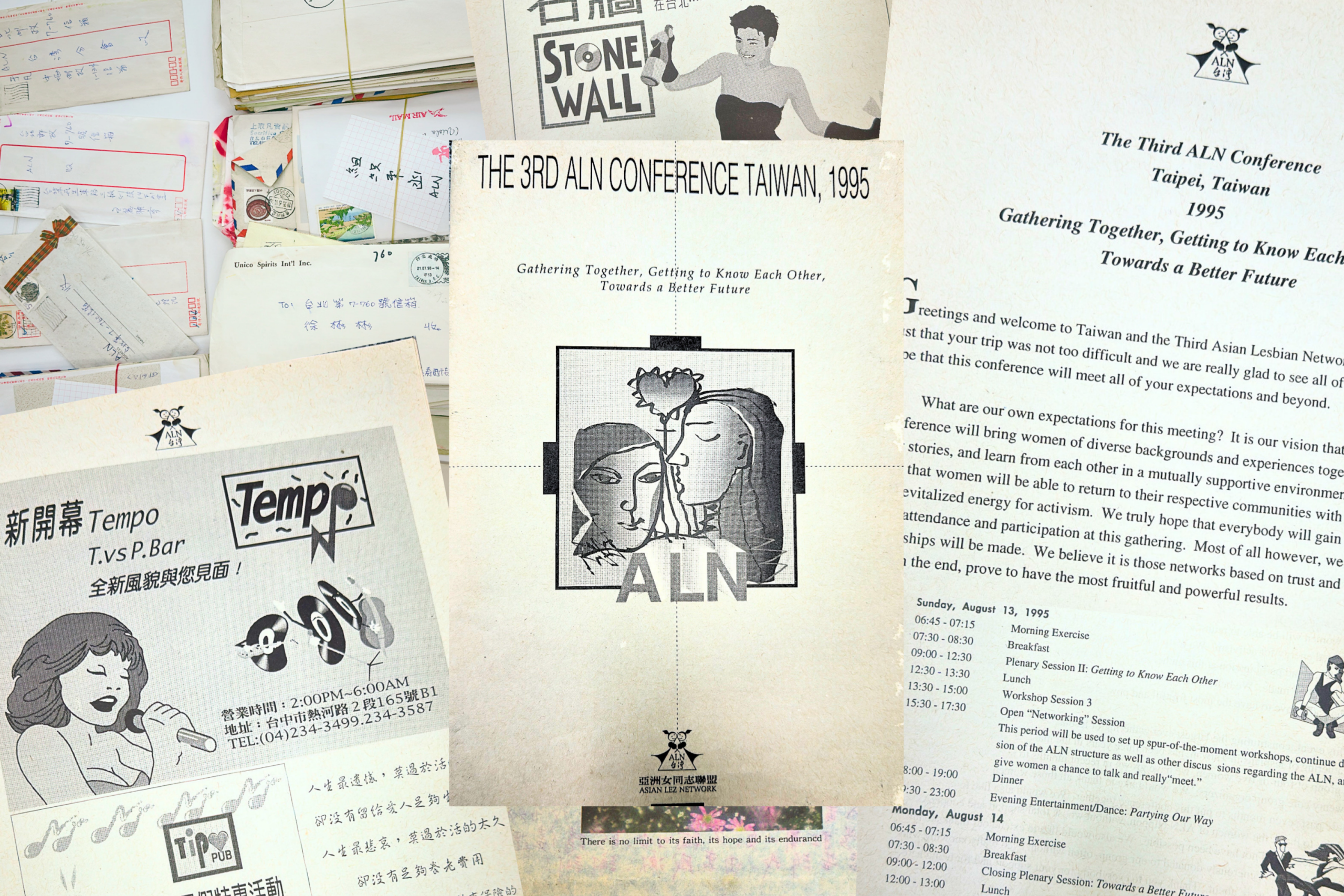
The third conference took place in Wulai, Taipei, Taiwan, in August 1995. More than 140 lesbians from eight countries attended the four-day event.
Quezon City, Philippines
1998
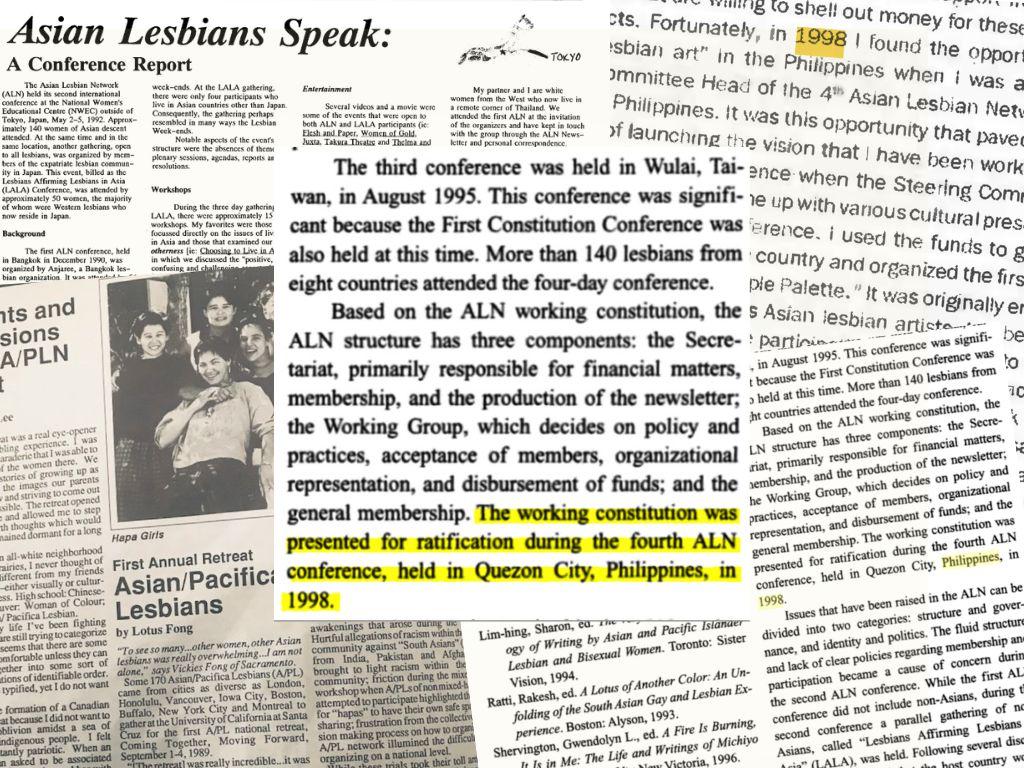
The fourth conference occurred in Quezon City in 1998, building on the Philippines' growing LGBT organising.

Continuing the Legacy: Why now?

The Need Continues

Twenty-nine years have passed since the last Asia Lesbian Conference. In that time, the political terrain has shifted. Some countries have expanded rights while others have weaponized religious and moral codes to justify state violence against LBQ communities.

A Dedicated Space

Economic inequality has widened under austerity measures that cut social services, leaving those without family or state support increasingly vulnerable. Environmental catastrophe compounds these conditions, with climate-induced displacement hitting marginalized populations hardest. Conversion practices, family coercion, and legal erasure remain everyday realities across much of Asia. Meanwhile, LBQ feminist organising has adapted and persisted through digital networks, grassroots mobilization, and cross-movement coalition-building.

Honoring Return

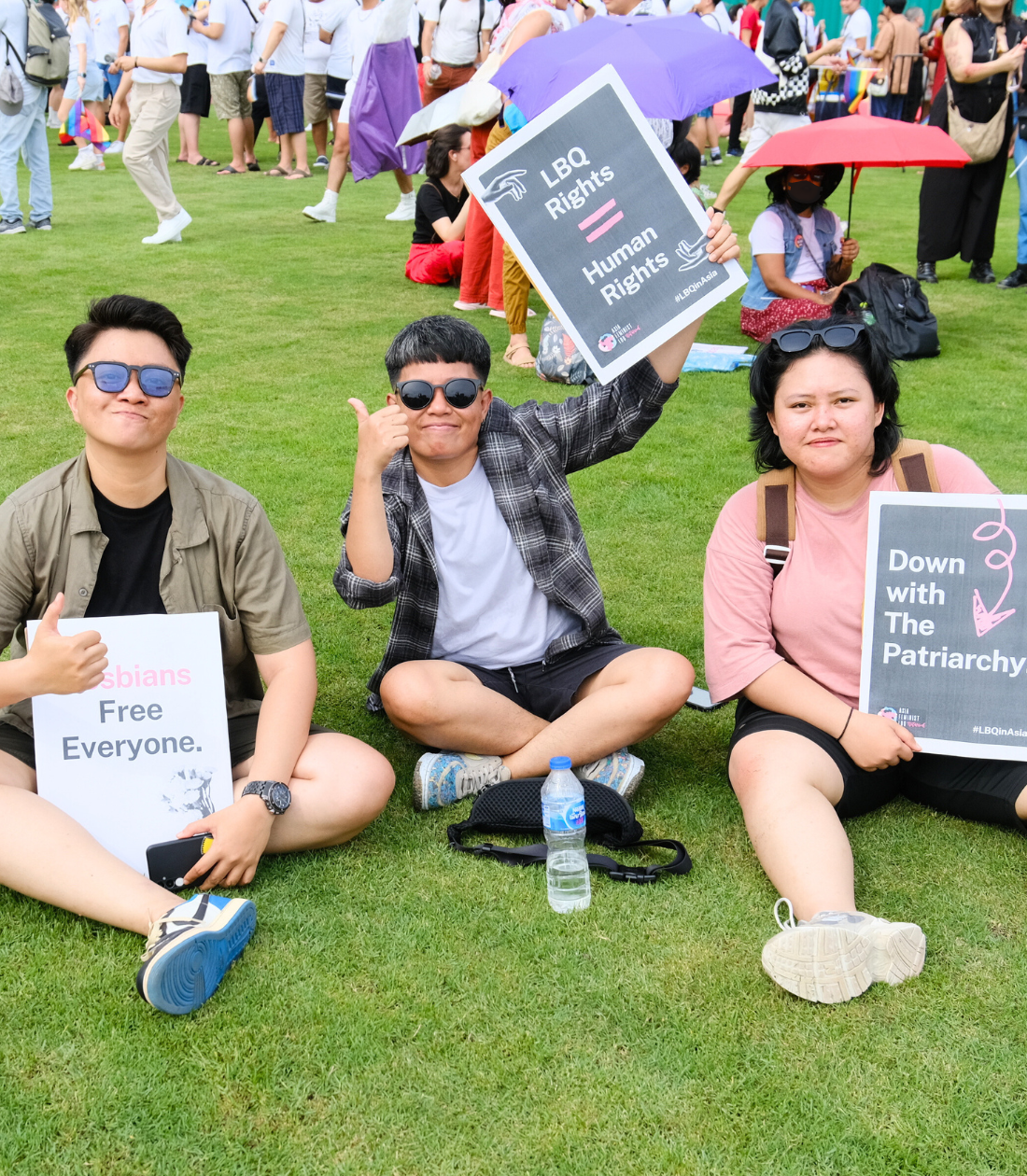
The Asia Feminist LBQ Network was formalised in 2019 after years of regional consultations, recognizing that scattered efforts needed coordinated platforms. We return to Bangkok in 2027 because isolation has never served our liberation. We gather to document what we know, resource what we are building, and deepen the solidarity that makes long-term resistance possible.
PARTICIPATE
1998 → 2027
We last gathered in Quezon City, Philippines. 29 years later, Bangkok calls us back.
  • Join us in strengthening ties across Asia and beyond.
  • We are building spaces where LBQ people lead, where our voices matter, where we shape what's next.
  • Let’s create the networks that will carry our movements forward

LASTING IMPACT

Networks stronger than borders

Relationships built across countries and cultures sustained collaboration for decades, proving that solidarity could last beyond conferences.

Decolonised organising

Asian LBQ movements organise through their own cultural contexts, priorities, and political visions.

Blueprints for collective governance

Constitutional work and organisational structures from these conferences provided models that grassroots groups continue to adapt today.

Visibility as survival

In contexts where LBQ existence was denied or criminalized, these gatherings demonstrated that coming together publicly was both possible and necessary.